
Resource — Ingredient Formats
When should a café chain use powder versus syrup ingredients?
Direct answer: Choose a powder ingredient when branches build the drink by dissolving or blending a measured dry dose, and choose a syrup ingredient when staff dose a liquid to flavor or sweeten a prepared base. The decision rests on preparation method, dosing accuracy, sensory target, packaging, storage, distribution, equipment and branch execution, and it is confirmed during technical review.
This powder vs syrup comparison South Korea operators consult compares the two formats point by point, shows when a program uses both, and explains how the Product Brief settles the choice.
Who this applies to: operating multi-branch food and beverage operators, franchisors, commissaries and hospitality groups planning a private-label ingredient program. The commercial screen is at least 500 kg of powder per flavor or 500 L of syrup per flavor in one intended order. An operating business below it today may be reviewed only through a current-evidence and dated near-term pathway. Check who the program fits.
The Two Formats
Same qualification path, different operating behavior
Both formats are food and beverage ingredients your branch teams measure and prepare into approved finished products. They behave differently in the storeroom, at the counter and on the delivery truck, and those differences drive the choice.
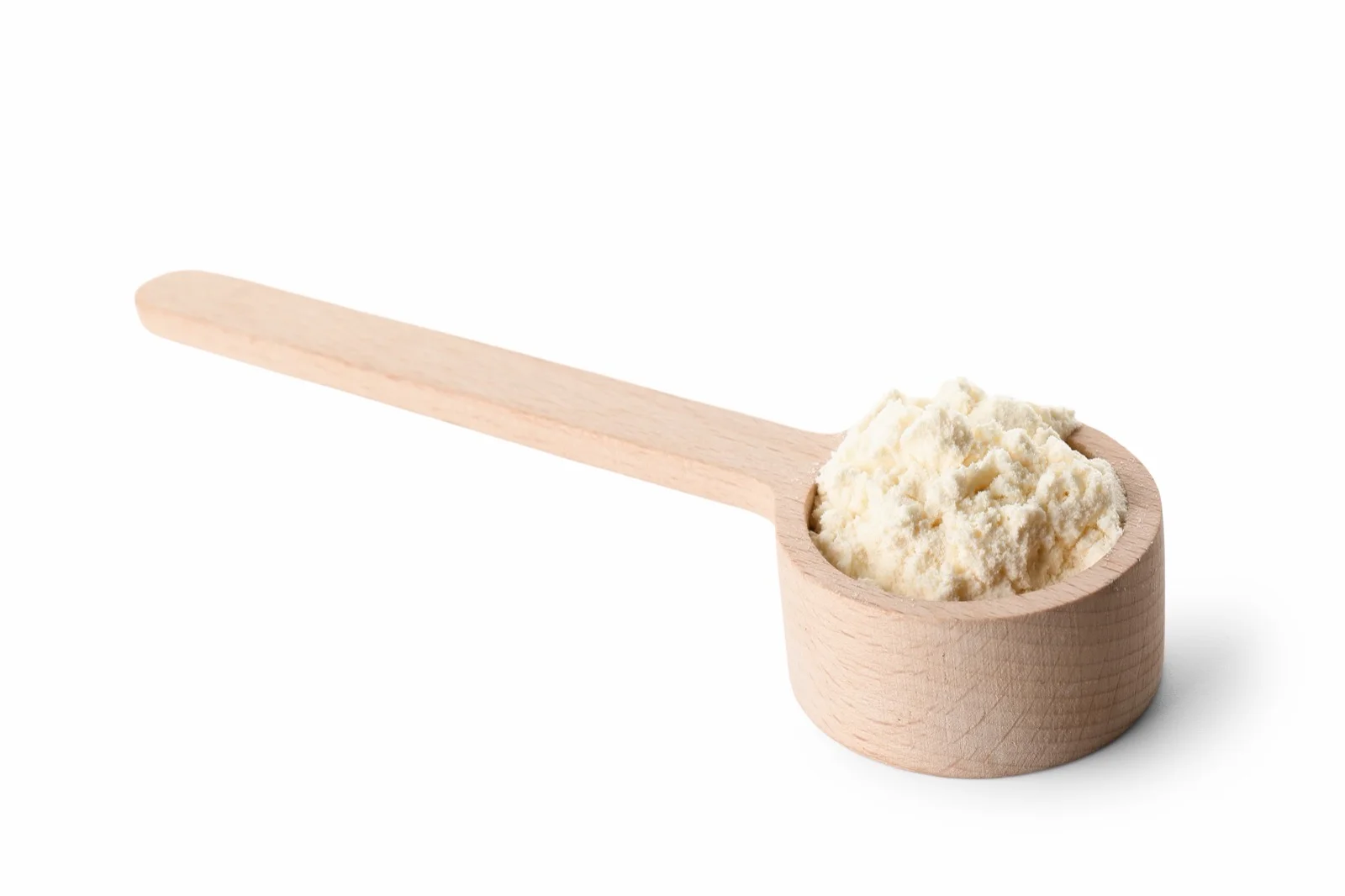
Powder ingredients
A dry beverage powder measured by weight or a defined dosing spoon. It typically forms the body of the drink and is dissolved or blended into the base.
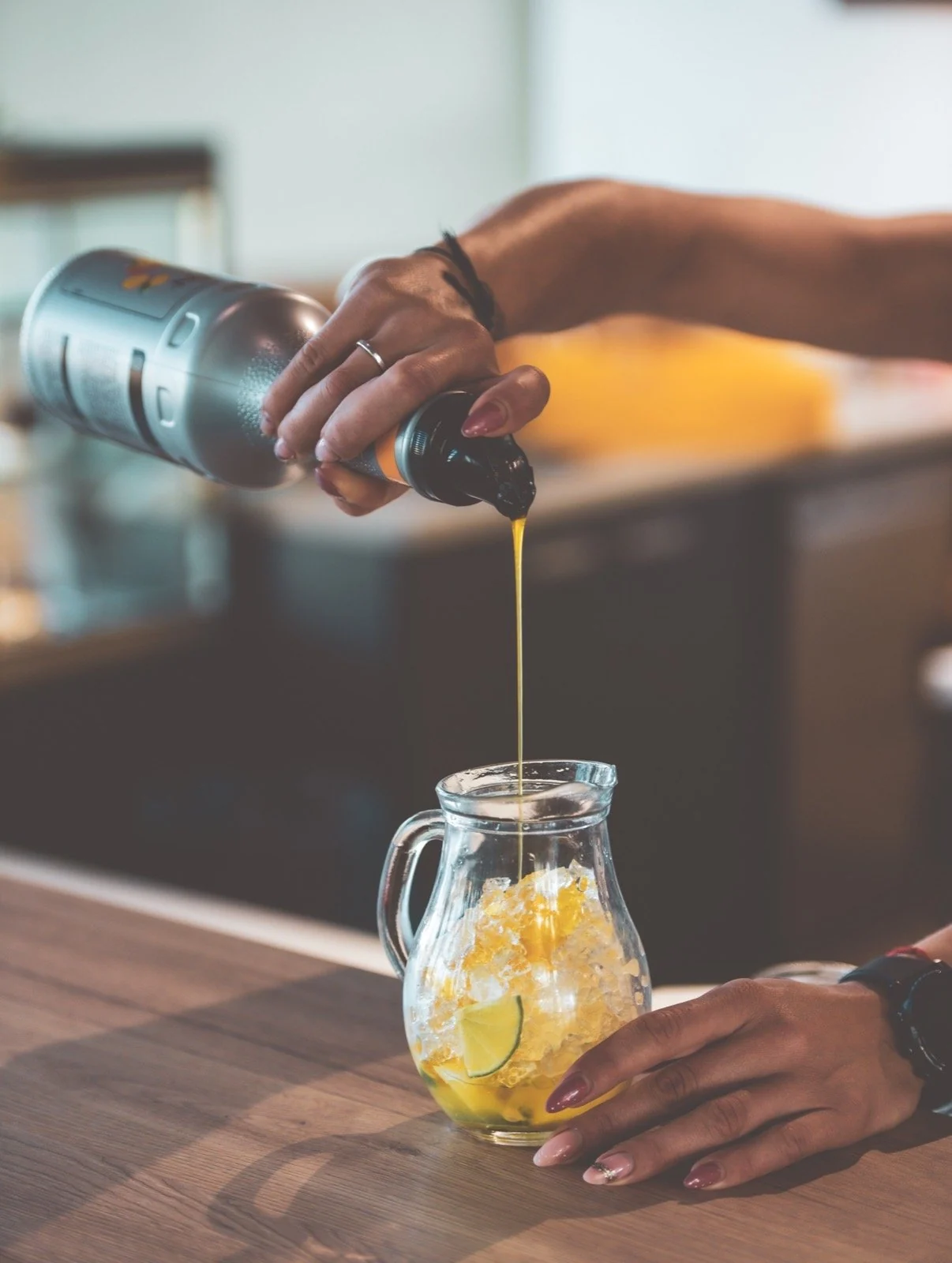
Prepared application shown. The supplied product is the powder or syrup ingredient used by the operator.
Syrup ingredients
A liquid beverage syrup dosed by volume. It typically flavors, sweetens or layers a base the branch already prepares.
Criteria
Powder versus syrup, criterion by criterion
| Criterion | Powder ingredient | Syrup ingredient |
|---|---|---|
| Preparation | Dissolved or blended into the beverage base. Often defines the body and texture of the drink. | Dosed into a prepared base to flavor, sweeten or layer. The base is built separately. |
| Dosing method | Measured by weight or a defined dosing spoon. Accuracy depends on tool discipline and level measures. | Measured by volume with pumps, jiggers or dispensers. Calibrated pumps typically give repeatable shots. |
| Packaging formats | Sealed pouches, bags or bulk sacks, in bulk or approved private-label packaging, subject to review. | Bottles, jugs or larger containers with dosing closures, subject to the same packaging review. |
| Storage and handling | Dry ambient storage per the approved specification. Moisture control and reseal discipline matter most. | Storage conditions per the approved specification. Opened-container handling and rotation matter most. |
| Distribution | Typically lighter per serving and compact to ship, which can suit longer routes to far branches. | Typically heavier per serving. Containers need sealed, upright handling and closer route planning. |
| Equipment needs | Scales or defined dosing spoons, plus the blending, frothing or hot-water equipment the drink requires. | Calibrated pumps or dispensers. Usually minimal additional preparation equipment. |
| Typical beverage applications | Milk-based and chocolate drinks, blended iced beverages and powder-built flavored bases. | Flavored coffee and milk drinks, sweetened iced teas, sodas and layered beverages. |
| Waste and yield control | Watch for over-portioning, spillage and torn packs. Yield is counted in servings per pack. | Watch for residue left in containers and partial-bottle waste. Yield is counted in doses per container. |
Read the table as directional guidance. Each row is confirmed against your drink, packaging and route plan during technical review.
Combined Programs
When both formats appear in one program
A chain may pair a powder base that defines the drink’s body with syrup variants that flavor it. This can keep the core preparation consistent while the menu rotates.
The two formats move through the same qualification path, but each receives its own approved specification, dose, packaging decision and replenishment plan. Powder and syrup volumes are not combined. Each powder flavor is screened against 500 kg per intended order, and each syrup flavor against 500 L per intended order.
Splitting a drink across formats may simplify branch execution, subject to technical review. One measured powder dose and one pumped syrup shot can be easier to audit than a multi-component assembly, but the recommended format is confirmed against the actual drink, equipment and route plan.
Resolving the Choice
How the Product Brief settles powder versus syrup
Brief & Branch resolves the format question inside the Product Brief stage of the program. The brief records the intended beverage application, the serving build, the dosing tolerance branches can hold, the sensory target, packaging preferences, storage constraints, distribution routes and available equipment.
Those answers are then reviewed against both formats. Sample and pilot stages test the recommended format in real branch conditions before commercial approval. A format that performs well in a flagship kitchen may still be revised after pilot findings.
Limitations
What this comparison cannot decide for you
Final format selection is confirmed during technical review, not from a table. Feasibility depends on the specific formula, flavor count, packaging, production setup and recurring forecast.
The comparison also assumes disciplined branch execution. A calibrated pump only helps if staff use it, and a defined dosing spoon only helps if packs are stored and resealed correctly.
The 500 kg powder and 500 L syrup figures are planning screens applied per flavor and intended commercial order. They are not final MOQs. Project-specific minimums, price, capacity and timing are confirmed only after technical and commercial review.
Next Step
Bring the format question to a commercial review
Apply if the operating business meets the screen now, or has a current, evidence-backed and dated near-term path. Share the application, forecast, packaging and branch conditions before sampling begins.
Request a Commercial Fit Review